
English
Intent

At Bewley Primary we firmly believe that a high quality English curriculum should be at the centre of every child’s education.
We recognise that English proficiency is a key skill that is essential for all aspects of everyday life, both when we are young and for our futures. With this in mind, we encourage children to foster a passion for English by preparing stimulating and exciting experiences based around high quality materials and opportunities for learning. By providing high quality teaching and opportunities for literacy application across the breadth of the curriculum, we aim to create Bright, Proud and Successful children who are competent, confident, enthusiastic and independent users of English, equipped with the skills needed to communicate and participate effectively as a member in today’s ever-changing society.
Therefore, we will:
- Set high expectations so our children will achieve their full potential.
- Respond to our pupils’ diverse learning needs in accordance with guidelines in the National Curriculum by providing a broad and balanced curriculum.
- Develop pupils’ abilities and enthusiasm with an integrated programme of speaking, listening, reading and writing.
- Provide pupils with opportunities to consolidate, practice and develop new English skills across the curriculum.
- Encourage confidence and enjoyment in writing, reading, speaking and listening.
During their time at Bewley Primary, we aim for all our children to:
- Practice, consolidate and develop English skills across the breadth of the curriculum.
- Speak and listen confidently and respond appropriately to different audiences. Be effective, competent communicators within a range of groups in both formal and informal contexts.
- Read and write with confidence, fluency and understanding for a range of purposes and audiences.
- Use a range of strategies to self-assess, edit and refine their own writing.
- Have an interest in words and their meanings and develop a growing vocabulary.
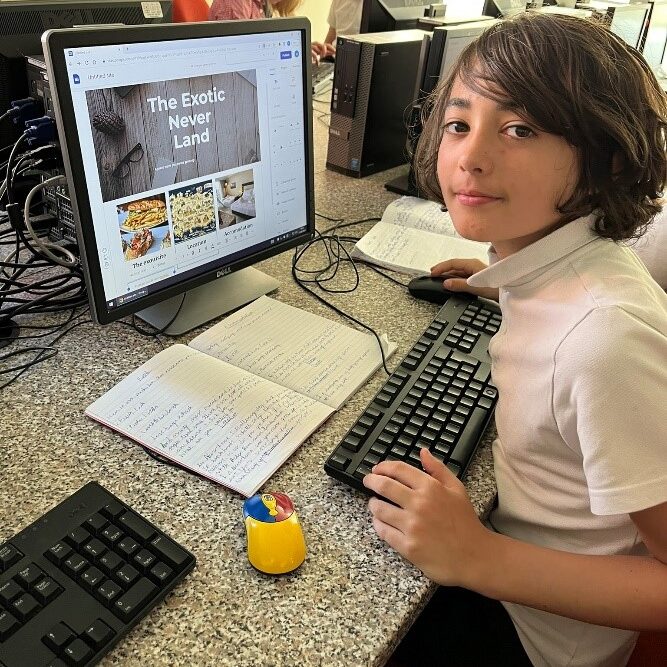
- Use Computing skills to improve, consolidate literacy and publish their work.
- Develop an understanding of the spelling system through the explicit teaching of phonics and discrete spelling lessons.
- Understand how grammar and punctuation is used, building on skills through school and applying this knowledge when reading and writing.
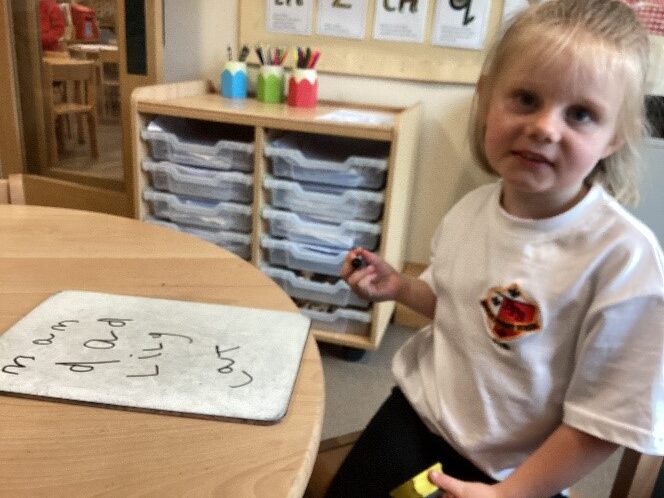
Develop a legible, fluent and cursive writing style.
Implementation
Writing Implementation
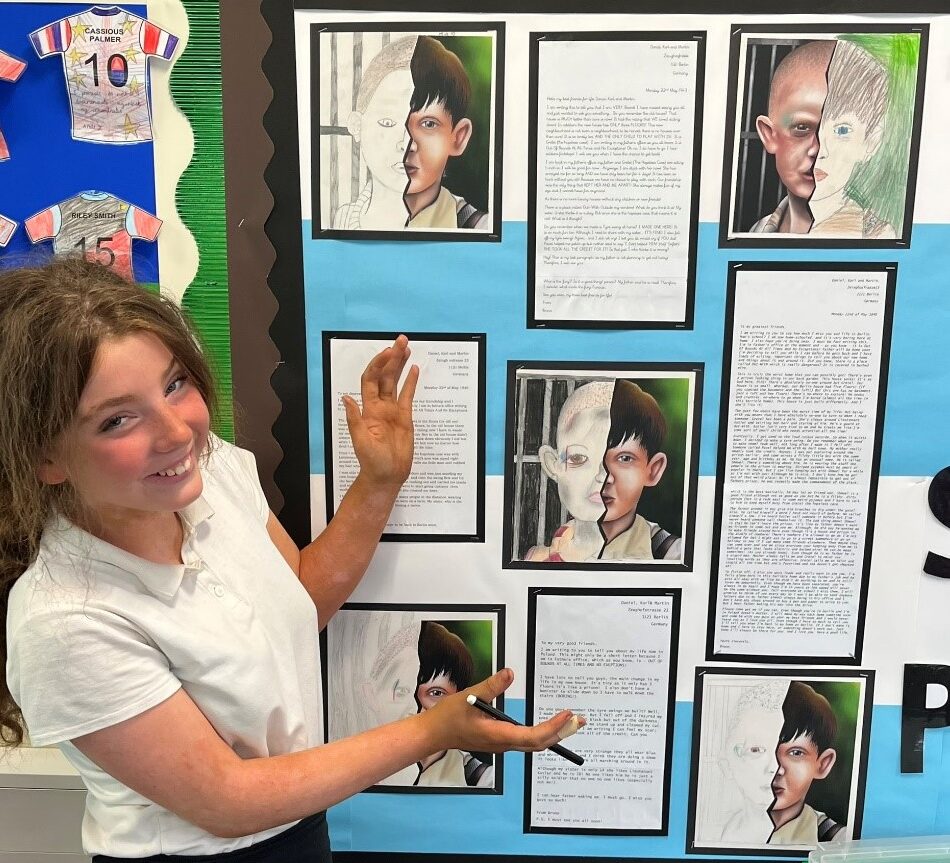
Opportunities for writing are planned across the curriculum and a variety of stimuli are used including the use of film, images, artefacts, school visits and WOW! experiences to spark children’s curiosity and imaginations.
All teachers model writing to a high standard demonstrating purpose and effect of the range of text types. These lessons cover knowledge and skills in writing, spelling and grammar. We use a consistent and progressive approach across the school to teach and develop children’s understanding of the types of sentences they can use to enhance their writing. Children make use of key stage specific writing toolkits throughout KS1 and KS2 which support their progress.
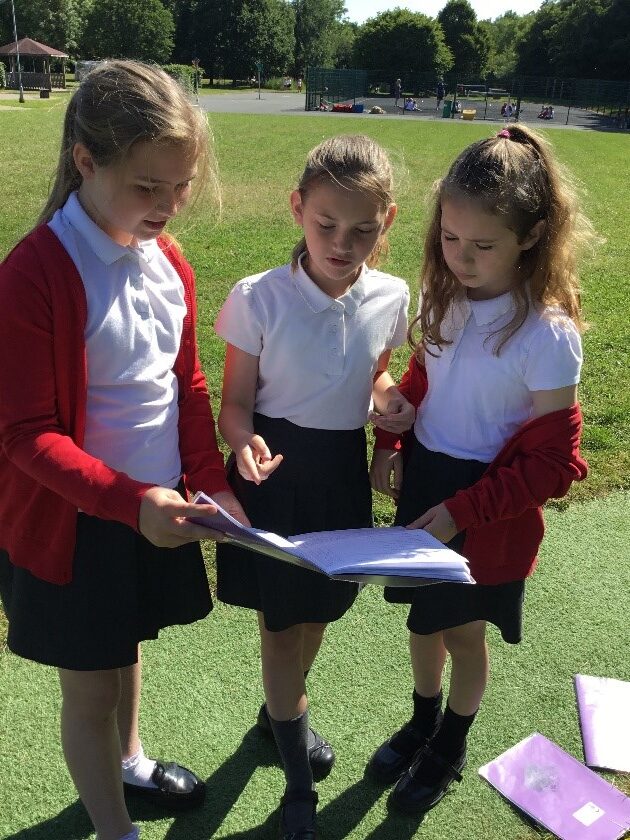
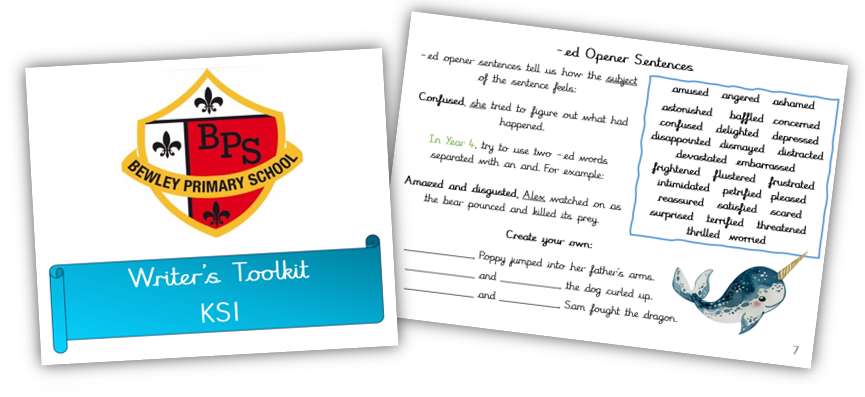
Teachers use success criteria that is matched to year group National Curriculum objectives. Success criteria are shared with the children prior to independent work using the ‘Must, Should, Could’ approach, ensuring all children can achieve above their current ability.
Children are taught to plan their work in a variety of ways and our marking and feedback cycle actively involves them in the editing and improving too. Children complete a piece of sustained writing regularly which helps to build up their writing stamina and speed.
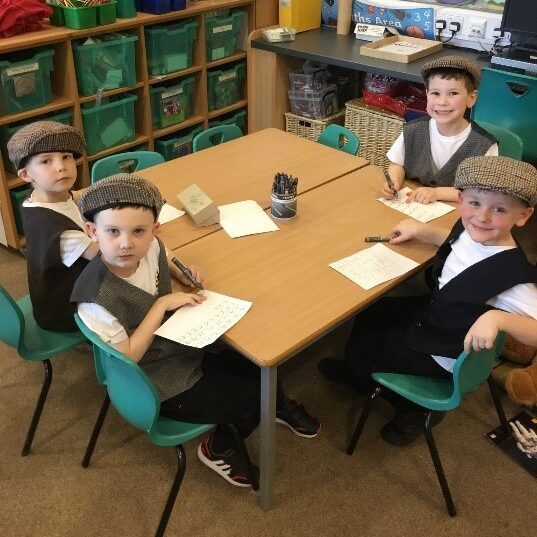

At Bewley, we have adopted a cursive style of handwriting which concentrates on correct letter formation and the joining up of letters. We value, encourage and expect well-presented work on a daily basis across the curriculum.
After children have completed the Read, Write Inc. phonics programme and have a secure understanding sounding out words, we teach spelling using the Grammarsaurus scheme, which builds on children’s phonics knowledge through a focus on morphology, etymology and orthography. Pupils learn how words are built from morphemes (prefixes, suffixes and roots), how the structure of a word relates to its meaning, and how word origins (etymology) influence spelling patterns. Rather than learning lists of words, pupils are encouraged to explore the building blocks of words so they can recognise patterns, not just sounds, and apply their knowledge to new vocabulary.
Teaching is guided by baseline assessments and the Place Value of Spelling approach, which checks understanding of foundational spelling concepts from earlier year groups, and spelling objectives are linked to the writing units and grammar being taught so pupils apply their learning in their writing.
Impact
Over their time in school, our children develop into enthusiastic writers who enjoy showcasing their literacy knowledge and skills. They grow in confidence to take risks in their writing, and love to discuss and share their ideas. Our attainment trend at the end of EYFS, KS1 and KS2 sees us meeting or exceeding the local and national averages at each assessment point.
The impact of our curriculum is visible in:
- Standards in attainment in reading and writing at the end of and between Key Stage 1 and Key Stage 2.
- Focused learners who use their prior learning to develop and build upon their writing skills over their school career.
- A curriculum that is accessible and engaging for pupils of all abilities.
- Stimulating classrooms and outdoor environments that inspire staff and pupils to explore the key skills in English.
- The cross-curricular opportunities that are made to support and extend children’s knowledge and understanding of the world.
Exciting and enjoyable experiences both in and out of school or virtually, which are memorable and inspire children in their work and wider lives.